From the Supreme Council for National Reconstruction and Korea Tungsten to the chairmanship of the committee for an integrated steelworks, and the founding of POSCO on Yeongil Bay.
- 1961age 34
Serving on the career management body at Army Headquarters when the May 16 coup takes place; works at the martial law command from the morning of 16 May. Appointed chief of staff to the chairman of the Supreme Council for National Reconstruction, and standing member for commerce and industry on its Finance and Economy Committee. Leads a trade mission to Europe and surveys its industry.
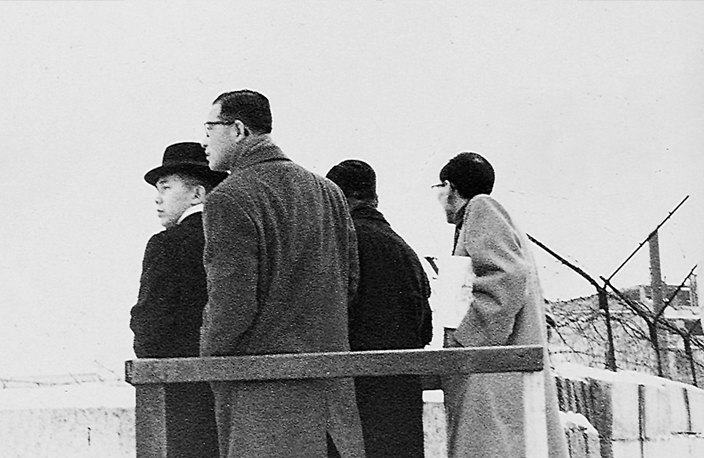
Leading a trade mission to Europe, at the Berlin Wall (1961) - 1962age 35
Takes part in drawing up the First Five-Year Economic Development Plan, and presses hard for reforestation financed by anthracite development.
- 1964age 37
At Park Chung-hee’s insistence he gives up study in the United States and spends ten months travelling Japan as a special envoy, from Hokkaido to Kyushu. First meets Yasuoka Masahiro. Named president of Korea Tungsten Mining on 8 December.
- 1965age 38
Hwang Kyung-no, Noh Joong-yeol and Hong Keon-yoo join him at Korea Tungsten, which returns to profit within a year. The president of Kawasaki Steel is invited to the presidential office; Park Chung-hee visits Pittsburgh and discusses an integrated steelworks with Foy, chairman of Koppers (26 May).
- 1967age 40
Appointed chairman of the committee to promote construction of an integrated steelworks.
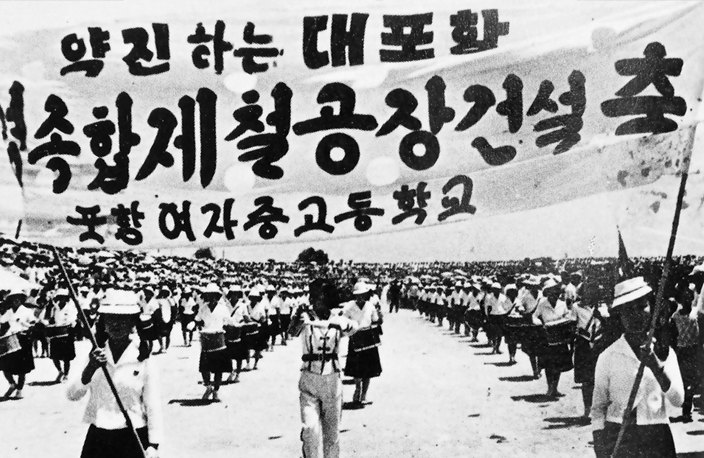
Pohang citizens celebrating the decision to build the steelworks (October 1967) - 1968age 41
The name Pohang Iron and Steel Co., Ltd. — POSCO — is settled, and the company is founded at the UNESCO building in Seoul on 1 April, with him as its first president. A site office (“Rommel House”) opens on Yeongil Bay; ground is prepared for the plant, and land bought and building begun for employee housing.
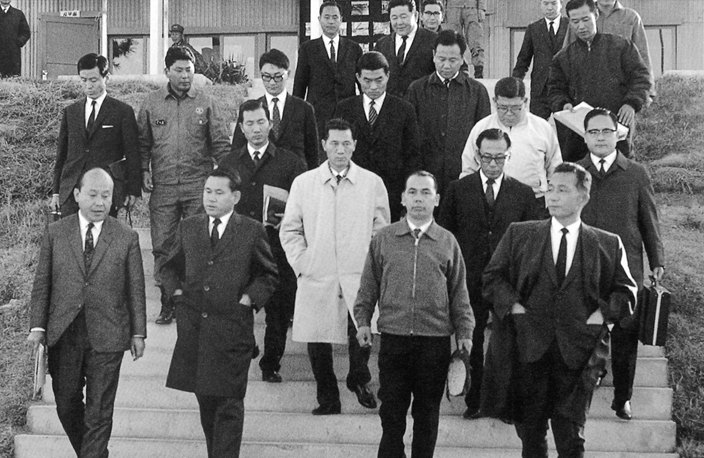
Leaving “Rommel House” to inspect the site, with President Park Chung-hee (front row, far right), 12 November 1968 - 1970age 43
The “Hawaii Idea” of 1969 — diverting the Korea–Japan claims settlement funds — is realised, and Park Chung-hee grants him discretion over the purchase of equipment (the “paper mapae”).
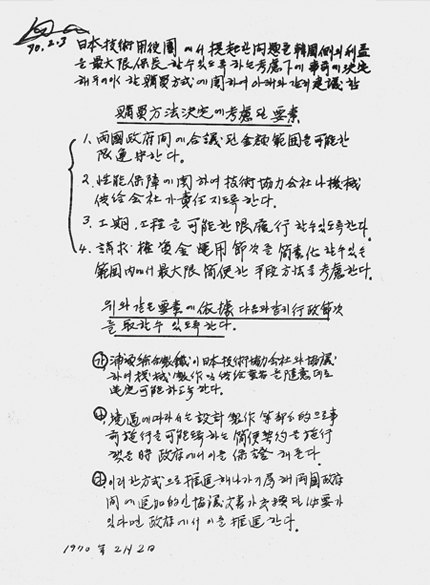
President Park Chung-hee’s handwritten authorisation — the “paper mapae” (2 February 1970)
※ For every period in one table, see the full chronology.